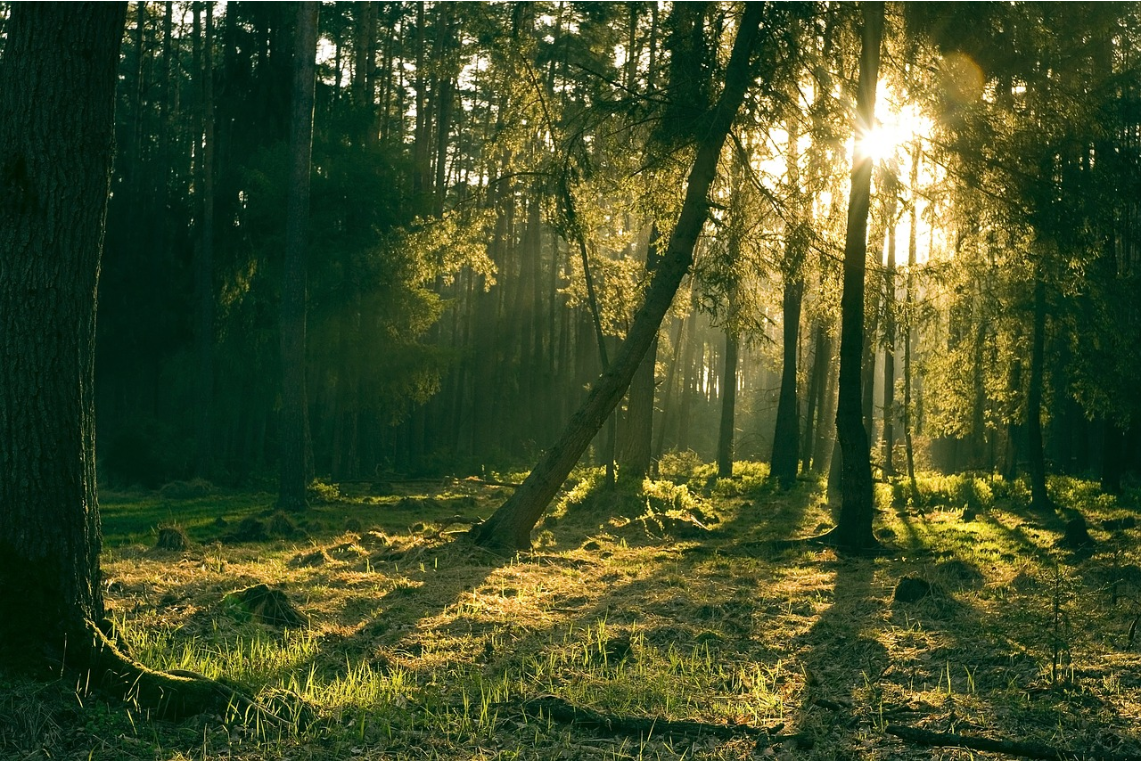
In the 1980s Japanese scientists noticed a correlation between the high density of forest in a particular area and the lower rates of breast, prostate and other cancers in the same area: the more forest in an area, the lower the incidence of the cancers.
They called this phenomenon ‘Shinrinyoku’ or “Forest bathing”.
I am lucky enough to live close to a national park covering 140,000 acres, so I have always taken walks among the trees because I find it so relaxing. Originally I thought it was simply the oxygen pouring out of all those leaves.
But, after further research I discovered there is a measurable difference in the high levels of the stress causing hormone, cortisol, in the salvia of folks in urban areas and the lower levels of cortisol present when we are in the country.
Not hard to understand when you think it is only for last few hundred years we have been living in urban areas. Prior to that, we lived a rural life for the human race’s many thousands of years of existence making the urban environment totally alien.
The next time you’re in a crowded place – such as a supermarket – make a conscious effort to stop and really listen to all the noise around you. Apart from the noise of the other folks talking there will be the beeping of machines, perhaps announcements over the public address system and maybe some type of music. All this noise increases levels of cortisol. Which – as we’ve already noted – are lower in the quieter countryside.
I always imagined it was simply being in the quietness of the forest where the trees soak up any ambient noise plus the oxygen pouring off the trees produced from the carbon dioxide in the atmosphere that were the main benefits.
But further research reveals that the forest bather enjoys even more benefits than simply a good supply of oxygen.
According to research, as well soaking up carbon dioxide and using it to produce vast amounts of oxygen, trees also produce aromatic volatile compounds called phytoncides which are actually part of the tree’s own immune system.
One of these phytoncides is called pinene which is inhaled by forest bathers. Measure the levels of pinene in the bloodstream of humans before and after they do a spot of forest bathing and there is a massive six-fold increase in the levels of pinene and a consequential boost to your natural killer cells, which are the front line of defense against cancer getting a toehold meaning you’re riding on the coat tails of the tree’s own immune system – which is certainly being part of nature.
It also appears that this killer cell boosting effect last as much as 30 days., so it will not be a dramatic upheaval in your schedule to manage a pleasant stroll in the woods perhaps a couple of times a month given that the benefits certainly appear to heavily out weight the effort..
So, the link that was spotted by those Japanese scientists between higher levels of forestation resulting in lower levels of cancers in the area has been validated and explained.
So don’t waste any time finding out here your nearest patch of woodland is and then going there and inhaling deeply.
Scientific papers:
https://openpublichealthjournal.com/VOLUME/1/PAGE/1/ABSTRACT/
Antonelli M, Barbieri G, Donelli D. Effects of forest bathing (shinrin-yoku) on levels of cortisol as a stress biomarker: a systematic review and meta-analysis. Int J Biometeorol. 2019;63(8):1117-34.
Morimoto K, Nakadai A, et al. Forest bathing enhances human natural killer activity and expression of anti-cancer proteins. Int J Immunopathol Pharmacol. 2007;20(2 Suppl 2):3-8.
Effect of forest bathing trips on human immune function. Environ Health Prev Med. 2010;15(1):9-17.
Li Q, Morimoto K, Kobayashi M, et al. A forest bathing trip increases human natural killer activity and expression of anti-cancer proteins in female subjects. J Biol Regul Homeost Agents. 2008;22(1):45-55.