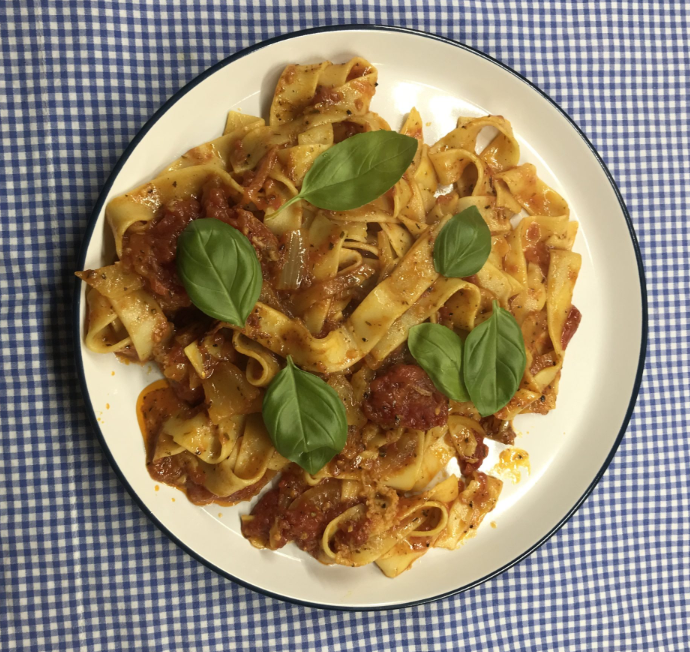
Apart from tasting wonderful, there are some powerful nutrients at work in this wonderfully tasty meal that will be most beneficial for men over 40 by being very kind to their prostate.
Tomato cooked in olive oil yields the valuable antioxidant lycopene. And, when coupled with the sulforaphane-rich broccoli they work synergisticly together to yield more benefit than the sum of the two parts.
Sulforaphane is created by an enzyme called myrosinase which is activated when you cut the broccoli head into florets.
But this enzyme is destroyed by heat. So, if you cook the broccoli right away after cutting it up, the enzyme does not have enough time to produce the maximum amount of sulforaphane before the heat destroys it.
Once the maximum sulforaphane is produced you can apply heat to cook. The myrosinase enzyme will be destroyed – but it’s served its purpose by then – and the sulforaphane is unaffected by cooking.
So the trick is to cut the broccoli into florets about 45 minutes, or longer, before you cook it to allow enough time for the myrosinase enzyme to finish producing maximum sulforaphane.
So, armed with that knowledge, let’s cook.
Ingredients:
Serves 2
2 teaspoons olive oil
1 teaspoon Turmeric
Freshly ground black pepper from peppermill
3 teaspoons dried oregano
1 brown onion
1 tin plum tomatoes
4 coils of dried Pappardelle pasta
6 florets of broccoli
5 leaves of fresh basil
2 cloves of garlic grated and left to stand for a few minutes
Method:
Drop the Pappardelle pasta to a pan of briskly boiling water cooking a minute less that stated in in its cooking instructions
Meanwhile pour the olive oil into a skillet with a lid followed by the turmeric, a few grinds of your black pepper and the oregano
While to oil is heating up, slice the onion thinly
Once the oil heats up add the onions and gently sauté on a medium heat for 3 – 4 minutes until golden brown
Add the tomatoes and stir well
Add the broccoli florets and put the lid on the skillet so the broccoli steams
Once the pasta has been cooking for about a minute less than the cooking instructions start to monitor its progress. From time to time remove a strip of pasta and drop it into a bowl of cold water and tasting ta piece to see if it’s cooked enough. Aim for an ‘al dente’ texture, depending on your personal taste.
Once the pasta is cooked to your satisfaction, drain it and add to the skillet of tomato and onion,
Add the raw garlic and mix thoroughly.
Plate up the food and sprinkle the basil leaves over
Finish with a further few grinds of black pepper and some Nutritional Yeast flakes.
Bon appetito!
Scientific research:
https://pubmed.ncbi.nlm.nih.gov/17213256/#:~:text=Lycopene%20at%2023%20or%20224,decrease%20(P%3C0.001).
Here is a printable version of the recipe:
Tomato, broccoli and Pappardelle pasta
Ingredients
- Serves 2
- 2 teaspoons olive oil
- 1 teaspoon Turmeric
- Freshly ground black pepper from a peppermill
- 3 teaspoons dried oregano
- 1 brown onion
- 1 tin plum tomatoes
- 4 coils of dried Pappardelle pasta
- 6 florets of broccoli
- 5 leaves of fresh basil
- 2 cloves of garlic grated and left to stand for a few minutes
Directions
- Step 1Drop the Pappardelle pasta to a pan of briskly boiling water cooking a minute less that stated in in its cooking instructions
- Step 2Meanwhile pour the olive oil into a skillet with a lid followed by the turmeric, a few grinds of your black pepper and the oregano
- Step 3While to oil is heating up, slice the onion thinly
- Step 4Once the oil heats up add the onions and gently sauté on a medium heat for 3 – 4 minutes until golden brown
- Step 5Add the tomatoes and stir well
- Step 6Add the broccoli florets and put the lid on the skillet so the broccoli steams
- Step 7Once the pasta has been cooking for about a minute less than the cooking instructions start to monitor its progress. From time to time remove a strip of pasta and drop it into a bowl of cold water and tasting a piece to see if it’s cooked enough. Aim for an ‘al dente’ texture, depending on your personal taste.
- Step 8Once the pasta is cooked to your satisfaction, drain it and add to the skillet of tomato and onion,
- Step 9Add the raw garlic and mix thoroughly.
- Step 10Plate up the food and sprinkle over the basil leaves
- Step 11Finish with a further few grinds of black pepper and some Nutritional Yeast flakes.
Source:
https://pubmed.ncbi.nlm.nih.gov/17213256/#:~:text=Lycopene%20at%2023%20or%20224,decrease%20(P%3C0.001).
This is fascinating! I never realized that timing the cutting of broccoli could make such a difference in nutrient retention. The idea of maximizing sulforaphane by letting it sit for 45 minutes before cooking is both clever and practical. I’m curious, though, how noticeable are the health benefits of this method compared to just cooking broccoli immediately? I love how olive oil enhances the lycopene in tomatoes—such a simple yet brilliant combination. Would this meal still be as effective if I used fresh tomatoes instead of tinned ones? Also, I wonder if adding other vegetables, like spinach or carrots, would complement the nutritional value or interfere with the synergy of the ingredients? What’s your take on experimenting with this recipe further?
This meal sounds like a powerhouse of nutrients, especially for men over 40. I never knew that cutting broccoli 45 minutes before cooking could maximize sulforaphane production—such a simple yet effective trick! The combination of tomatoes and olive oil for lycopene is brilliant, and the synergy with broccoli makes it even more beneficial. I’m curious, though, does the type of olive oil matter here? Extra virgin or regular? Also, would adding other vegetables like spinach or kale enhance the nutrient profile even further? I’d love to try this recipe, but I wonder if the timing of cutting the broccoli is flexible—what if I cut it an hour or two in advance? Would that make a difference?
This meal sounds like a powerhouse of nutrients, especially for men over 40. I had no idea that the timing of cutting and cooking broccoli could make such a difference in maximizing sulforaphane. The combination of lycopene from tomatoes and sulforaphane from broccoli seems like a winning pair for health. The recipe itself seems straightforward and packed with flavor, especially with the addition of turmeric and oregano. I’m curious, though, does the 45-minute wait time for cutting broccoli apply to all cooking methods, or just specific ones? Also, would substituting fresh tomatoes for tinned ones affect the lycopene content? I’d love to hear your thoughts or tips on how to tweak this recipe for even more benefits!
This is such an insightful read! I never knew that cutting broccoli and letting it sit before cooking could maximize its health benefits. The synergy between lycopene from tomatoes and sulforaphane from broccoli is fascinating—it’s like a nutritional power duo. I’m curious, though, does the 45-minute wait time for the broccoli apply to all cooking methods, or just steaming? Also, would adding other vegetables or spices affect the enzyme’s activity? The recipe sounds delicious, but I wonder if the turmeric and oregano might overpower the subtle flavors of the broccoli and tomatoes. What’s your take on adjusting the seasoning to let the natural flavors shine more?
By the way, we’ve integrated libersave into our regional voucher system. It’s amazing how easily it brings together various providers on one platform!